

See the Book
Review the book and decide if you want a signed copy.

Online Stores
This book can also be purchased on other platforms
Free Shipping
Shop a signed book today and receive free nationwide shipping.
Discount
If you buy 2 or more copies of the book you will receive a 7% discount.
Purchase outside of the US
If you live outside the US, write to us and we will calculate the cheapest shipping cost.
Digital Edition
A digital edition can be downloaded as a PDF from a link that we will send you after purchase.
Our Books
Books Released & Coming Soon
Omar combines narrative style with fiction and history, giving a touch of mystery to each literary work he creates.
While his native language is Spanish, rich in adjectives and similes, his works are nonetheless interesting when translated into English. His literary work is intended to be available in both languages, and other languages of interest will be added in the future.


About Omar D. Suarez MD
Cuban doctor and writer based in Miami, Florida, USA
Omar D. Suárez was born in Havana, Cuba, in December 1951.
He graduated with a degree in medicine in 1978, obtaining a specialization in Immunology in 1982.
Since 1995, he has lived in Miami, Florida, USA, where he continues to practice medicine.
Although this novel (My Grandfather’s Grandfather) marks his literary debut, Omar has contributed to numerous medical textbooks in collaboration with other professionals in the field.
Book Synopsis
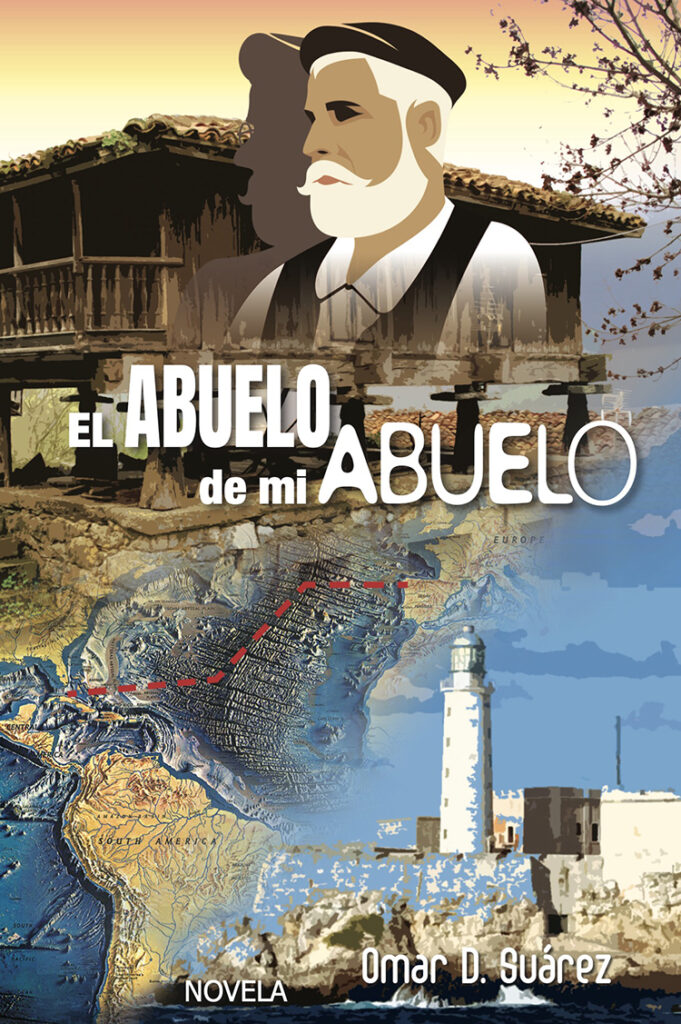
My Grandfather’s Grandfather
This novel opens in Havana in the year 2035—a city now free from communism.
Dr. José González—an eighty-five-year-old Cuban physician and the story’s protagonist—decides to return to his native island to spend his final days, having lived nearly his entire life in exile. On his deathbed, he resolves to reveal to his only son a secret concerning his Asturian ancestors—a secret that deeply affected him when he first discovered it, and of which only his wife is currently aware.
The novel transports the reader back to Havana in 1993—the moment Dr. González began his exile—when he made the agonizing decision to abandon his homeland and family to emigrate to Spain. Upon his arrival in the land of his grandparents, he immediately became an undocumented immigrant in the eyes of the local authorities. His plan was to reunite with his wife and son once he had established himself in Madrid, though he remained haunted by the uncertainty of whether his dream of embracing them once again in the Spanish capital would ever truly become a reality.
The novel explores the sensitive subject of emigration through the experiences of various characters across different historical eras and circumstances—a cast that even includes José Martí, Cuba’s national hero, who was himself an immigrant.
The secret at the heart of this novel revolves around the protagonist’s Asturian forebears, specifically linking one of them—Dr. González’s own “Great-Great-Grandfather”—to historical events that took place in Cuba during the late 19th century. In a journey into the past, the story recounts a crime committed in a remote, rain-swept Asturian village in the early 20th century. This event hastened the plans to emigrate to Cuba of the man who would later become Dr. González’s grandfather. In 1902, this villager decided to emigrate to Cuba in search of a better future for his family; he did so, however, with the additional objective of finding his own grandfather—a mysterious figure who had vanished in eastern Cuba in the late 19th century, leaving his family back in the village with scant details regarding his life in that distant land. Any emigrant may find their own experience reflected in this novel, for they may well have felt sorrows similar to those that accompanied Dr. González during the early days of his own exile: loneliness, separation from family, sadness, and the daunting task of starting over far from his homeland and from all those he loved.